
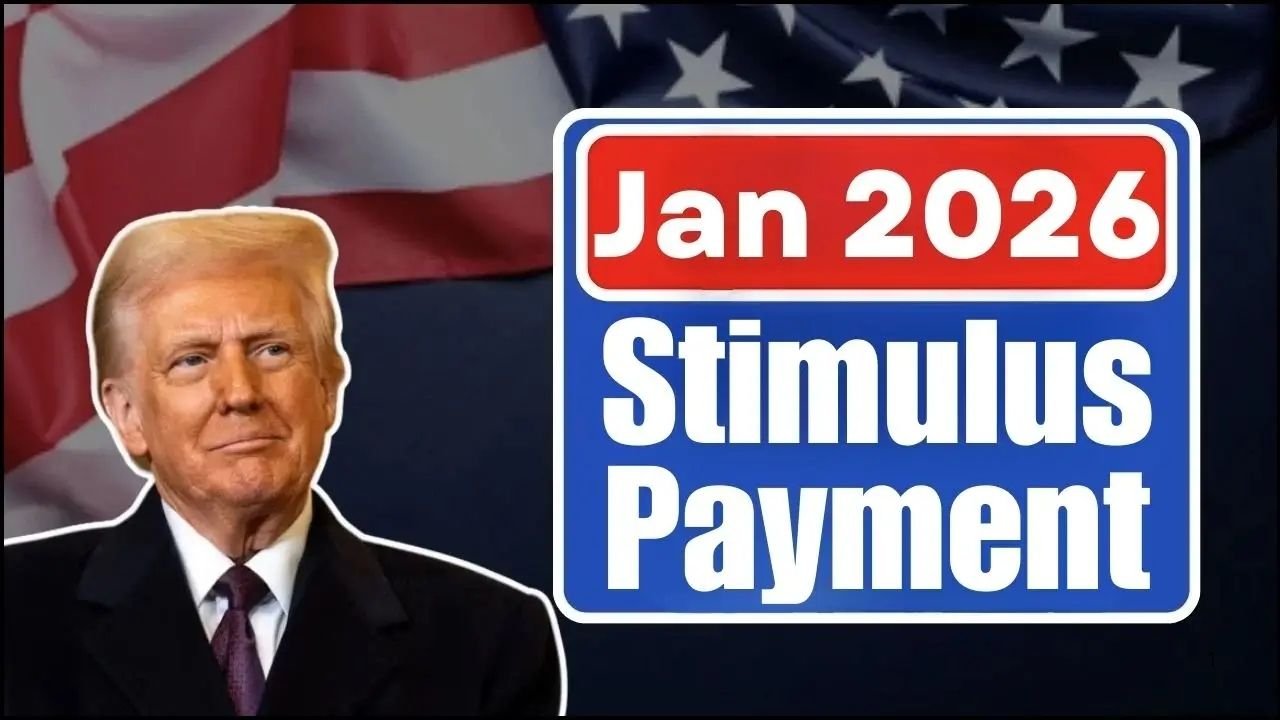
If you’ve been scrolling through social media, you’ve likely seen posts claiming a stimulus payment January 2026 is on the way, accompanied by an IRS direct deposit relief payment and a mysterious tariff dividend. With rising prices hitting households hard, such news sounds like a lifeline—but does it hold water? Let’s separate fact from hype and examine what’s actually happening.
The Origins of the Rumor
The buzz around a January 2026 stimulus stems largely from former President Trump’s comments on tariffs potentially funding refunds. Social media circulated screenshots claiming $2,000 per person would hit bank accounts directly. While this caught attention, the reality is far more nuanced.

Economic experts point out that projected tariff revenue in 2026 tops out at $300 billion, far short of the amount needed to fund universal $2,000 payments nationwide. Furthermore, no legislation authorizes these payments, and Congress must approve all federal disbursements. Fact-checkers have labeled most of these claims false or misleading, noting that the IRS has made no official announcements regarding such stimulus payments.
Stimulus Payment January 2026: What You Need to Know
The idea of a federal stimulus evokes memories of the 2020–2021 COVID relief checks. Now, whispers of new payments in January 2026 have reignited hope. Many posts suggest amounts from $1,400 to $3,200 per household, sometimes tied to unclaimed 2021 rebates.
Here’s the reality:
- The Recovery Rebate Credit closed in April 2025.
- There is no new federal stimulus program in place for January 2026.
- IRS activity during January relates strictly to standard tax refunds, not new relief payments.
- Local or state-specific programs—like Alaska’s oil dividend or one-time rebates in certain states—can mimic stimulus payments, but these are not federal.
IRS Direct Deposit Relief Payments

Direct deposit remains the IRS’s preferred method for refund distribution. In 2025, 93% of refunds were delivered electronically, speeding up access and reducing processing costs. There is no separate “relief payment” scheduled for January 2026. The IRS continues to phase out paper checks, focusing on efficiency.
Scam Alerts
Social media hype has also fueled scams, with fake portals promising tariff dividend status checks or advance payments in exchange for personal data. The IRS never contacts taxpayers via phone or email demanding information. Always verify through IRS.gov or the IRS2Go app to ensure your financial safety.
Tariff Dividend: What It Means
The “tariff dividend” idea proposes giving U.S. households a rebate funded by import tariffs. Trump’s 2025 statements suggested $2,000 per person, framing it as a direct benefit from trade policy. While appealing, there are key obstacles:
- Revenue limits: Even with high tariffs, 2026 collections may reach only $207–350 billion.
- Congressional approval: Any nationwide payout requires legislation.
- Hidden costs: Tariffs act like a tax on imports, already adding roughly $1,200 per household since 2025, reducing net benefit.

Analysts conclude that while a targeted dividend for low-income households could be feasible, universal $2,000 checks are extremely unlikely in early 2026.
Other Targeted Payments
Not all federal payments are off the table. Certain groups receive specific benefits:
- Military families: Warrior Dividends of $1,776 for housing-related support.
- Coast Guard and veterans: Devotion bonuses up to $2,000.
- Farmers and agricultural workers: Crop insurance and trade-related adjustments.
These programs deliver real, targeted relief without creating sweeping fiscal strain, unlike broad stimulus claims.
Economic Considerations
Hypothetical $2,000 payments could stimulate consumer spending, particularly among lower-income households. Estimates suggest a one-time boost could increase GDP by 0.7%, while repeated payments might smooth spending into 2027. However, if implemented while the economy operates near full capacity, inflationary pressures could rise, prompting the Federal Reserve to maintain higher rates.
Tariffs themselves reshape supply chains over time. Long-term benefits could include more domestic production and job creation, but short-term costs for importers and consumers remain significant.
Summary: What to Expect in January 2026
- No federal stimulus payments are scheduled for January 2026.
- IRS direct deposit payments relate only to standard tax refunds, not new relief.
- Tariff dividends remain proposals without legislative approval.
- Targeted programs—military bonuses, agricultural support—are the only confirmed disbursements.
The takeaway: be skeptical of social media claims, rely on official IRS and Treasury announcements, and focus on legitimate avenues for relief.
FAQs
Is a stimulus payment January 2026 actually coming?
No, the IRS has made no announcements regarding new stimulus checks.
When would an IRS direct deposit relief payment arrive?
Nothing is scheduled beyond standard tax refunds in January 2026.
What is the tariff dividend?
A proposed $2,000 rebate funded by tariffs, currently speculative and unlikely.
How can I avoid stimulus scams?
Never provide personal or banking information to unsolicited calls or emails. Verify all details on IRS.gov.
Are there any real payments in 2026?
Yes, targeted payments like military bonuses exist, but no universal stimulus checks are planned.
In short, while January 2026 is prime tax season, the widespread claims of direct $2,000 payments and tariff dividends are largely wishful thinking. Families should focus on legitimate refunds and verified programs rather than viral rumors.